{{ quickViewProduct.product_title }}
Stock ID
{{ quickViewProduct.product_stock_number }}
Product Features:
- {{ feature.product_feature_description }}
{{ option.product_option_title }}
{{ value.product_option_value_title }}
{{ quickViewProduct.product_stock_number }}
{{ value.product_option_value_title }}
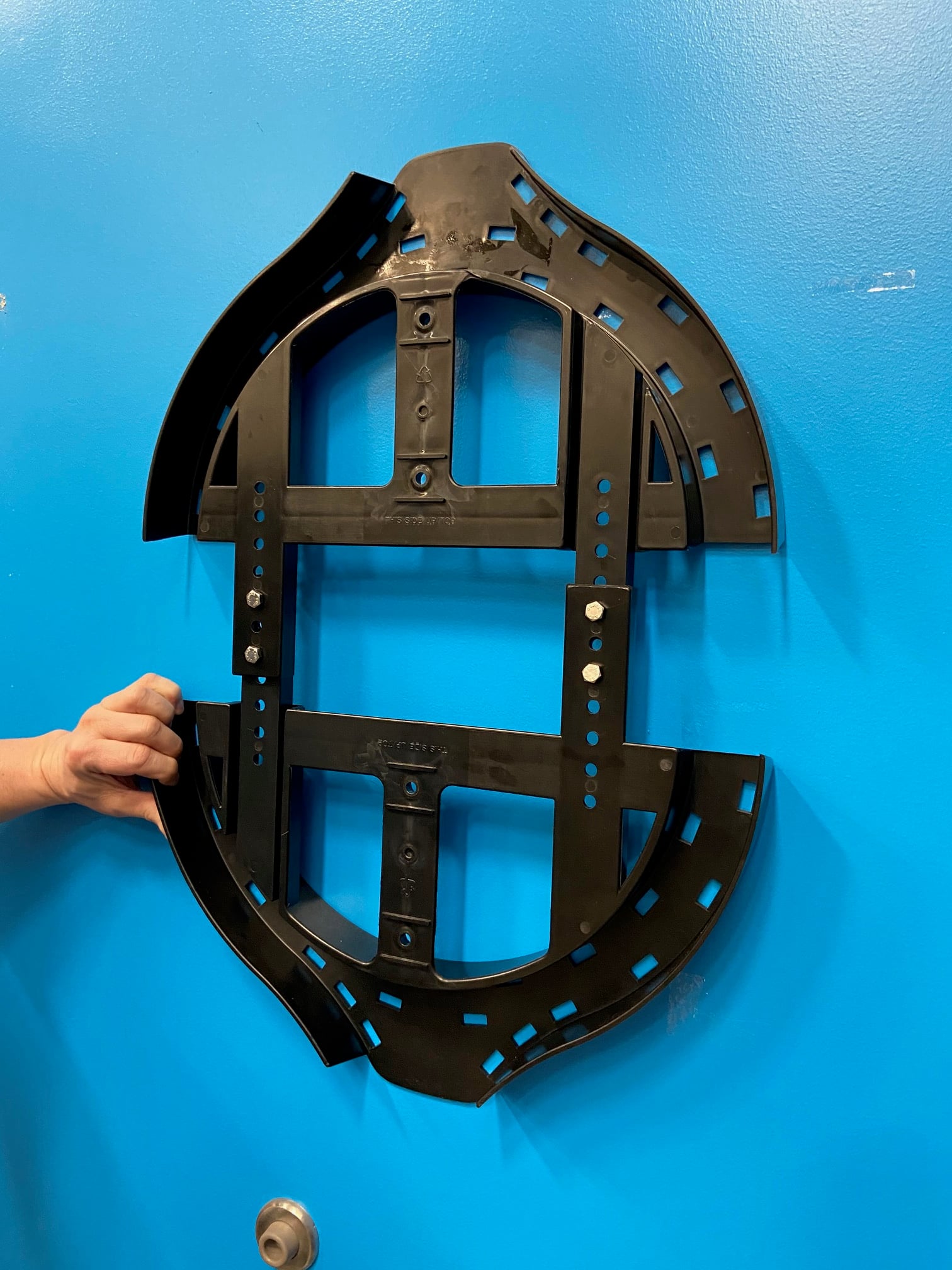
If you’ve worked around aerial fiber long enough, you’ve seen it: extra cable coiled wherever it fit, zip-tied into shapes it was never meant to take, quietly waiting to become tomorrow’s trouble ticket.
That’s exactly the problem fiber Sno-Shoes are meant to solve.
A Sno-Shoe is a simple, purpose-built fiber slack storage device designed to safely manage excess fiber in aerial, strand-mounted, ADSS, pole-mounted, or wall-mounted applications. No electronics. No magic. Just a clean way to store slack while maintaining proper bend radius and making future access easier. Every tight coil you leave today is someone else’s outage tomorrow.
Sometimes boring solutions are the ones that keep networks alive.
Fiber doesn’t fail loudly. It fails slowly, quietly, and expensively.
Poor slack storage can lead to:
microbending and signal loss
damaged jackets from wind and ice movement
tight loops that look fine until temperature changes
messy installations that turn simple maintenance into a full outage
A Sno-Shoe keeps slack organized in a controlled loop so fiber isn’t fighting gravity, tension, or weather 24/7.
This isn’t about looking neat. It’s about not touching the same cable again six months later.
Coiling fiber by hand works right up until it doesn’t. Hand-coiling slack is how ‘temporary’ installs become permanent mistakes.
A properly designed Sno-Shoe:
maintains a consistent bend radius
supports multiple entry and exit paths
prevents crushing and crossover pressure
keeps slack visible and accessible
The open design also means technicians can add, remove, or re-route fiber without cutting ties or undoing someone else’s shortcuts.
Which installers appreciate more than they’ll ever say out loud.
Fiber Sno-Shoes are most often used in:
Aerial strand installations
Storing slack near distribution or transition points.
ADSS fiber networks
Supporting cable without compromising jacket integrity.
Pole-mounted access points
Where space is limited but future access is guaranteed.
Wall-mounted transitions
Managing slack before entering buildings or enclosures.
They’re especially useful in access networks where growth is expected and “we’ll deal with it later” is not a plan.
Not all Sno-Shoes are created equal, despite what certain catalogs would like you to believe.
Key features to look for:
multiple entry and exit points for routing flexibility
a trough depth that actually accommodates real-world fiber counts
an open or slotted design for fast installation
compatibility with strand, ADSS, pole, or wall mounting
materials suitable for outdoor environments
If it forces tight bends or requires gymnastics to install, it’s not helping.
Multilink Sno-Shoes are designed around how fiber is installed and maintained, not how it looks in a product photo.
The 12" Sno-Shoe in particular is built for small to medium diameter fiber where space is limited but proper slack storage still matters. With four entry and exit points and a 2" wide by 1.75" deep slotted trough, it allows multiple fibers to be routed cleanly without overhandling.
It supports strand mounting, ADSS mounting, pole mounting, or wall mounting, making it flexible enough for most access and distribution scenarios.
Simple. Durable. Designed to stay out of the way while doing its job.
There’s no universal answer for every installation, but Sno-Shoes shine when:
space is tight
future access is expected
fiber counts are manageable
speed and simplicity matter
They’re not meant to replace closures or cabinets. They handle the boring, failure-prone part of the install so closures and cabinets aren’t compensating for sloppy slack management and If you’ve ever cut zip ties in freezing weather, you already know why this exists.
Fiber Sno-Shoes aren’t flashy. They don’t blink, buzz, or transmit data.
What they do is prevent problems. For today and tomorrow.
In aerial fiber networks, that’s often the difference between a system that scales cleanly and one that slowly turns into a maintenance nightmare.
Sometimes the smartest upgrade is the simplest one.
Back to Multilog


 440.366.6966

 440.366.6966
 ()
()